
Free printable · 12 checks
Print this property viewing checklist or save it as a PDF
Browser print opens a printable version; choose “Save as PDF” when your device offers it. Printed notes stay with you. The live checklist saves one property record locally on your device and uploads no property details.
Outside
- Roof and exteriorLook for slipped tiles, damaged gutters, staining, and recent repairs.
□ Clear□ Follow up□ Concern□ Not checked
Notes: ______________________________________________ - Walls and movementRecord visible cracks, bulges, or doors and windows that do not sit square.
□ Clear□ Follow up□ Concern□ Not checked
Notes: ______________________________________________ - Damp and drainageNote smells, marks, condensation, ground levels, drains, and standing water.
□ Clear□ Follow up□ Concern□ Not checked
Notes: ______________________________________________
Systems
- ElectricsRecord the consumer unit, socket condition, and any visible temporary wiring.
□ Clear□ Follow up□ Concern□ Not checked
Notes: ______________________________________________ - Heating and hot waterNote boiler or heat-source age, controls, radiators, and hot-water arrangement.
□ Clear□ Follow up□ Concern□ Not checked
Notes: ______________________________________________ - Plumbing and water pressureAsk to run taps and record leaks, slow drainage, pressure, or pipe concerns.
□ Clear□ Follow up□ Concern□ Not checked
Notes: ______________________________________________
Inside
- Windows and doorsOpen examples and note failed seals, locks, draughts, frames, and glazing.
□ Clear□ Follow up□ Concern□ Not checked
Notes: ______________________________________________ - Noise and daylightPause in main rooms and record traffic, neighbours, outlook, and natural light.
□ Clear□ Follow up□ Concern□ Not checked
Notes: ______________________________________________ - Layout and storageCheck real furniture routes, usable storage, room proportions, and awkward access.
□ Clear□ Follow up□ Concern□ Not checked
Notes: ______________________________________________
Paperwork
- Tenure and lease detailsRecord what the seller or agent states; verify documents with your solicitor.
□ Clear□ Follow up□ Concern□ Not checked
Notes: ______________________________________________ - Charges and planned worksRecord stated service charges, estate fees, reserve funds, and planned major works.
□ Clear□ Follow up□ Concern□ Not checked
Notes: ______________________________________________ - Access and parkingNote boundaries, shared access, parking arrangement, bins, bikes, and deliveries.
□ Clear□ Follow up□ Concern□ Not checked
Notes: ______________________________________________
Viewing prompt only. This checklist cannot reveal concealed defects, verify legal statements, value a property, or replace an appropriate survey, conveyancing, financial, tax, insurance, or trade assessment.
Turn one observation into a useful follow-up
Illustrative example, not a real property report: you see a brown mark below a bedroom window. Record “Brown mark below bedroom window; cause not checked”, choose “Follow up”, and ask when it appeared and whether repair records are available. A mark alone does not establish a leak or a diagnosis.
Keep the seller’s explanation separate from what you observed. Use the damp and drainage guide for checks to discuss with an appropriate professional. If you could not inspect something, record “Not checked” on paper or “Unknown” in the live checklist instead of treating it as clear.
Choose a pack for this viewing stage
Before the appointment
Save the listing, floor plan, Energy Performance Certificate, asking price, tenure description, and appointment details before you arrive. Write down personal deal-breakers and practical requirements: commute, accessibility, outside space, parking, room use, storage, or school and care needs. This keeps important checks visible when a property makes a strong first impression.
Ask the agent or seller whether photographs and short notes are allowed. Do not photograph people, private documents, security details, or neighbouring property without permission. A viewing record should be useful without collecting unnecessary personal information.
Step-by-step property check guides
Use these focused guides for checks that benefit from a consistent sequence, precise observation language, and clear professional boundaries. All twelve use the same evidence and editorial checks.
- Roof Checks During a House Viewing
- Damp Checks During a House Viewing
- Electrical Checks at a House Viewing
- Water Pressure Checks at a Viewing
- Wall Crack Checks at a House Viewing
- Heating Checks During a House Viewing
- Window and Door Checks at a Viewing
- Noise and Daylight Checks at a Viewing
- Layout and Storage Checks at a Viewing
- Lease and Tenure Questions at a Viewing
- Service Charge Checks at a Viewing
- Access and Parking Checks at a Viewing
Guides for each viewing decision
Carry the same record into a second visit, follow-up questions, and a side-by-side shortlist without turning missing evidence into a pass.
Property-type viewing checklists
Property context changes emphasis, not the twelve-check structure. These guides add focused evidence requests without inventing a new score or diagnosis.
Twelve checks · one visual language
What to notice—and how to record it
Viewing Ledger uses the same twelve labels for each home. Each item can be marked clear, follow up, concern, or not checked. “Not checked” is a useful result: it prevents silence from becoming false reassurance. These original 3D scenes are reference cues based on real visible signs and viewing contexts, not diagnoses or surveys.
Visible fabric and drainage signs
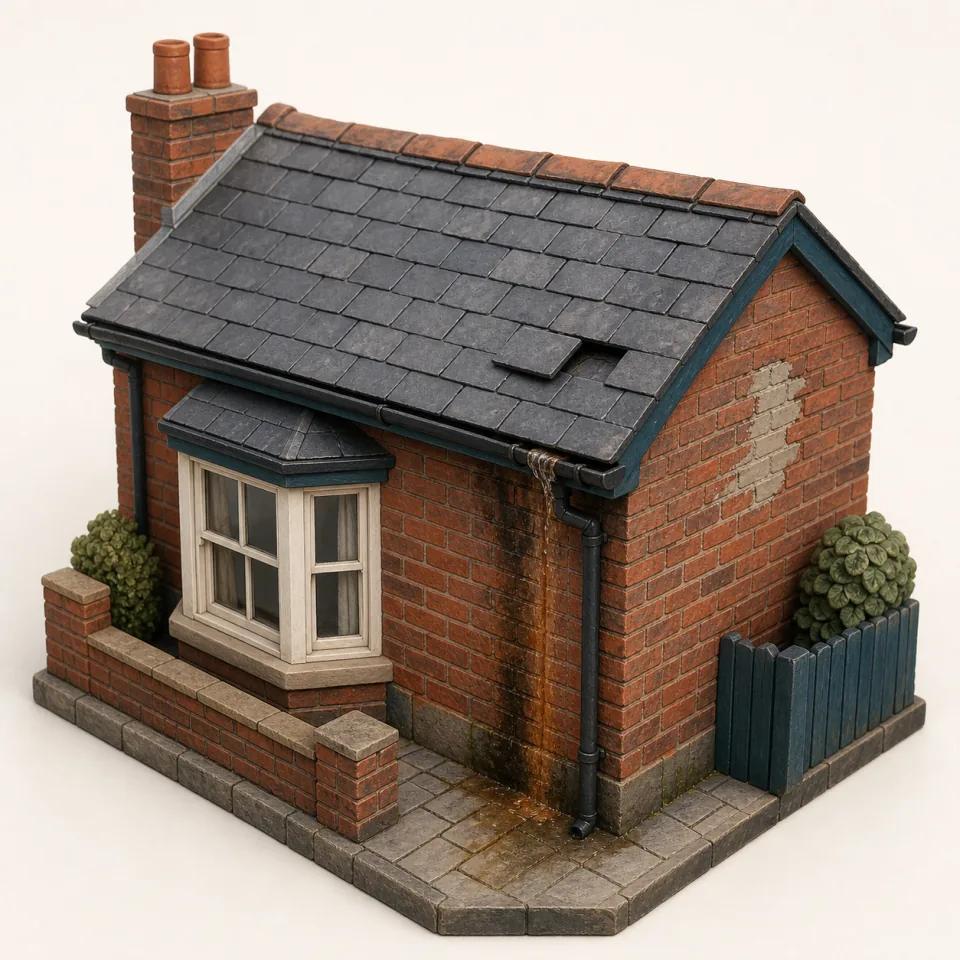
Roof and exterior
Roof covering, gutter joints, staining, and repair patches visible from permitted ground-level areas.
One slate sits out of line above the front bay; dark staining runs below the right gutter joint.
Follow up: Ask what was repaired and whether invoices, reports, or guarantees exist.
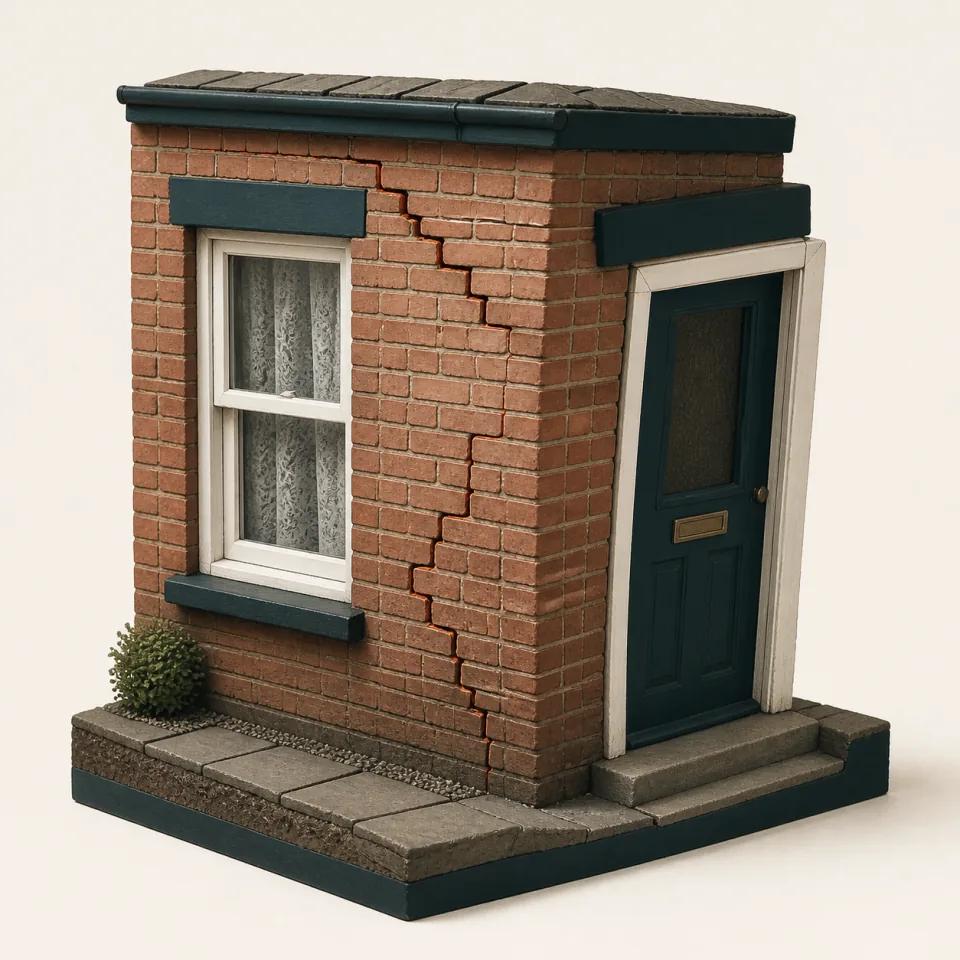
Walls and movement
Crack position and shape, bulges, and openings that do not appear square.
Stepped crack follows mortar joints from the upper window corner; front door frame appears out of square.
Follow up: Record the exact location and ask what reports or repairs exist; leave cause to a qualified surveyor.
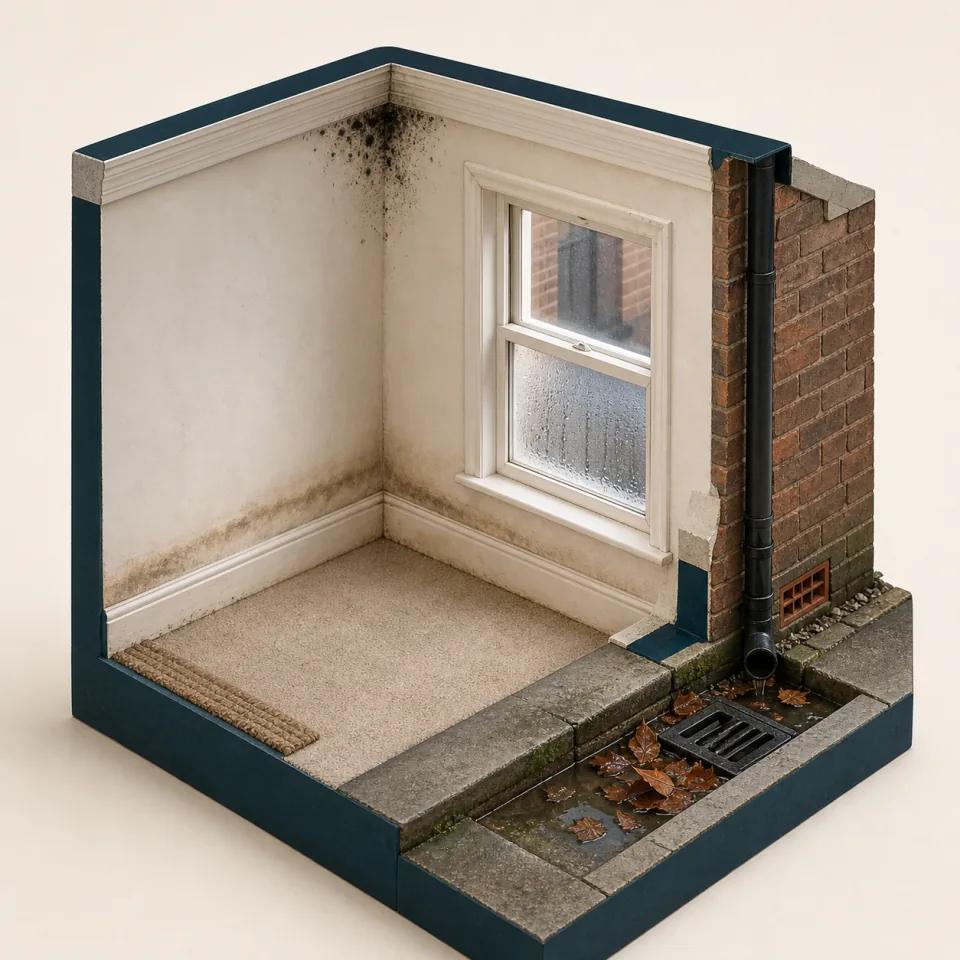
Damp and drainage
Smells, marks, mould, condensation, outside ground levels, gullies, and standing water.
Brown mark runs above the skirting; lower pane is wet; leaves and shallow water sit around the outside gully.
Follow up: Note weather and room conditions, then ask about treatment, leaks, drainage work, and supporting reports.
Permitted tests and records to request
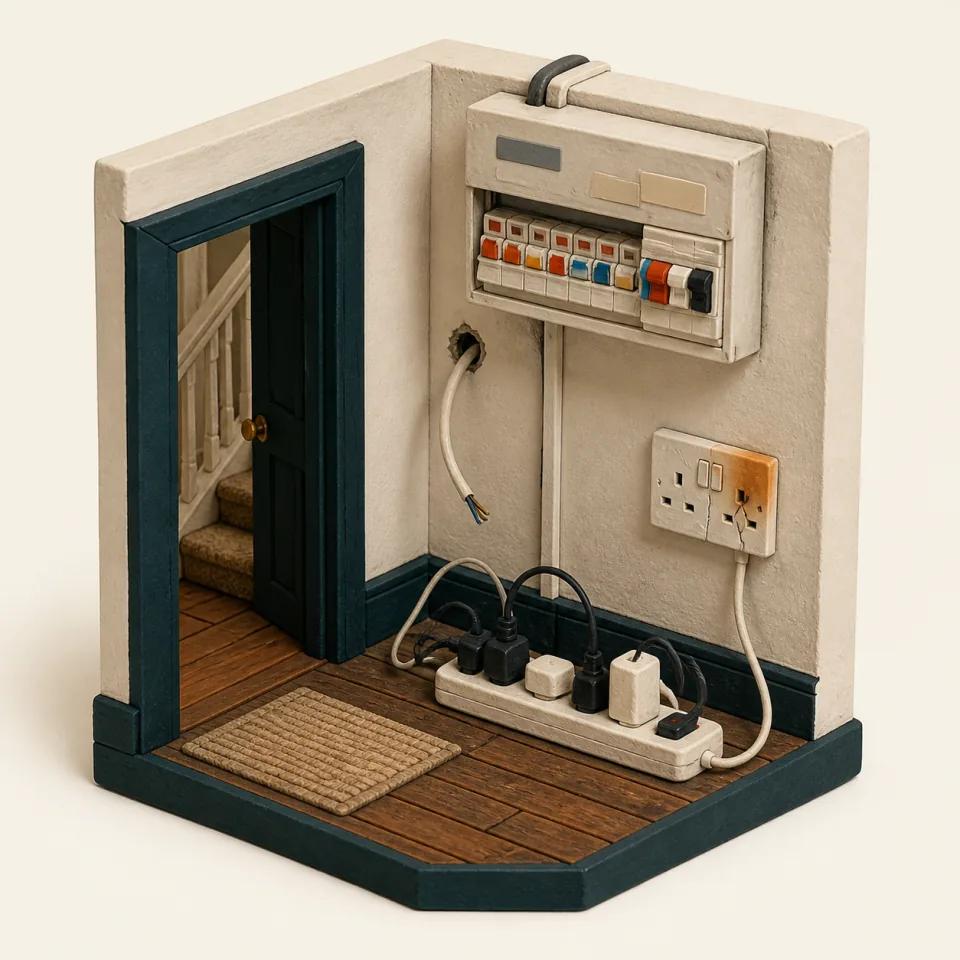
Electrics
Visible consumer-unit condition, damaged socket faces, heat marks, temporary wiring, and overloaded extensions.
Socket face is cracked with a brown mark above the switch; loose cable ends beside the consumer unit.
Follow up: Do not touch damaged fittings. Ask for current electrical records and use a qualified electrician for safety checks.
Heating and hot water
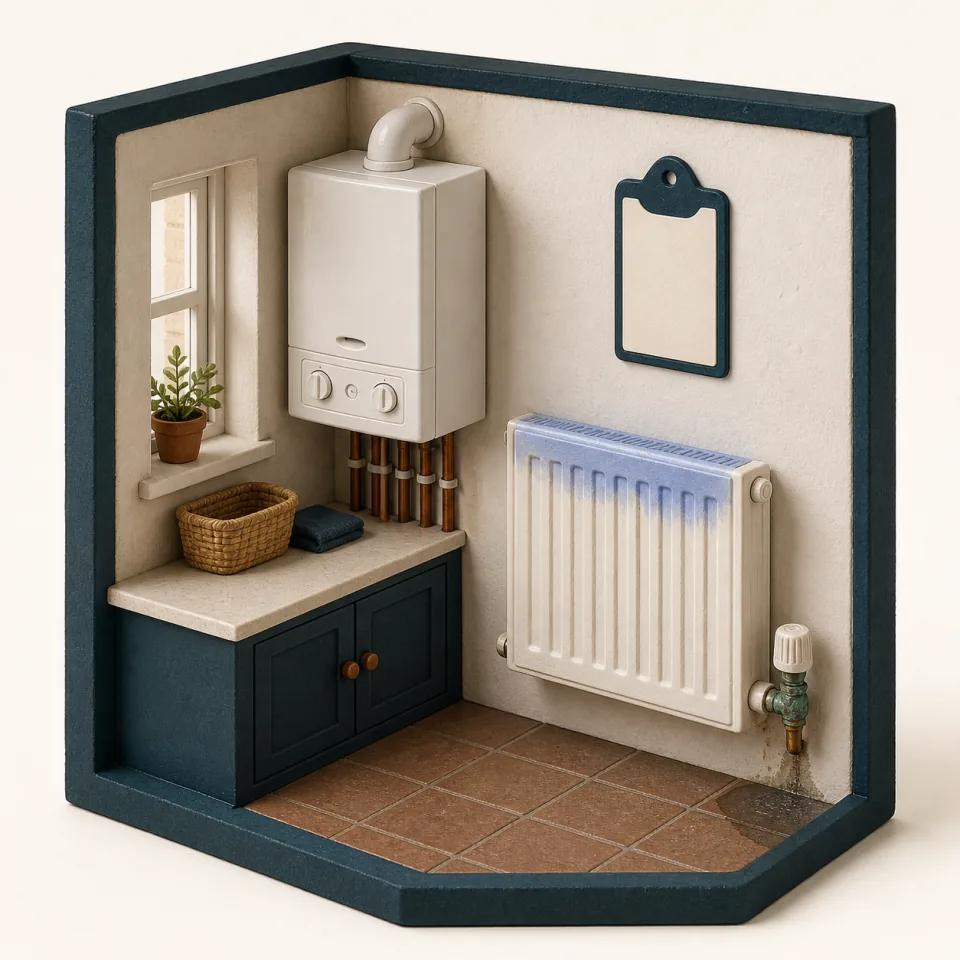
Heat source and controls, radiator response, corrosion, water marks, and service evidence actually seen.
Radiator valve is corroded with a mark below; top section stayed cool during the permitted test; service record not seen.
Follow up: Ask when system last ran, what is serviced, and which records or warranties can be provided.
Plumbing and water pressure
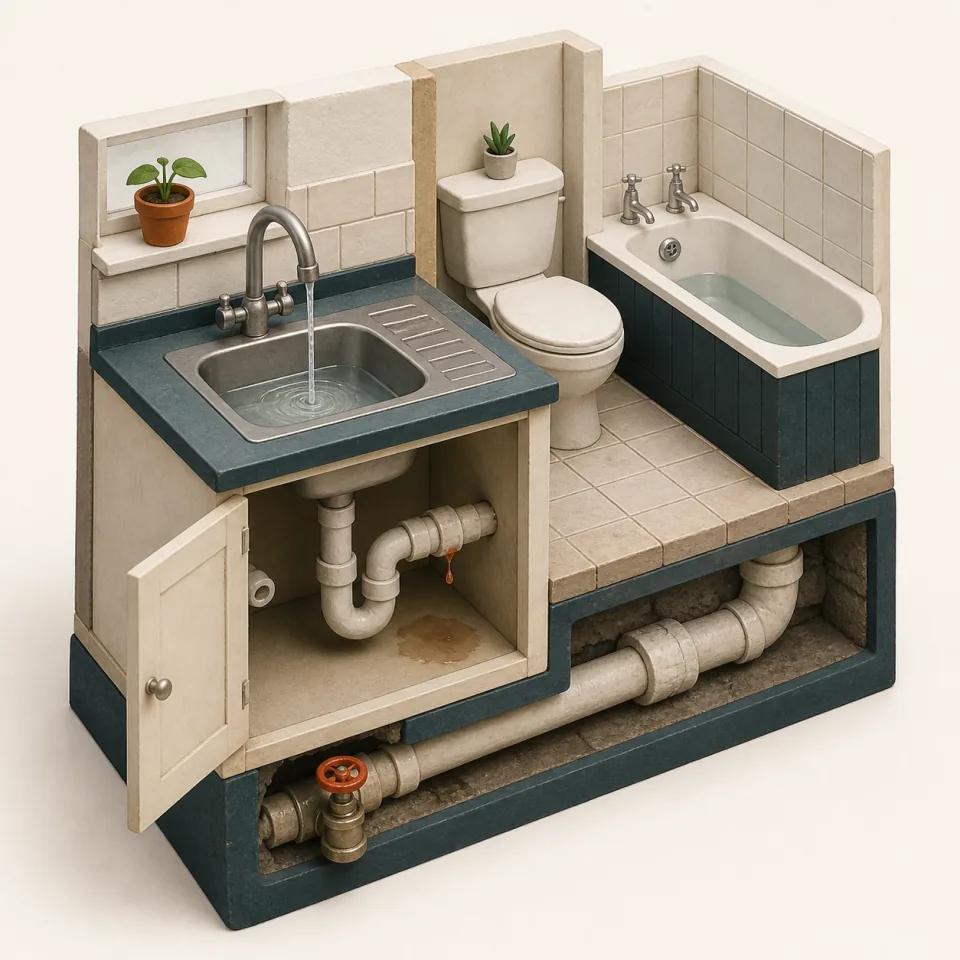
Tap flow, drainage speed, visible joints, stains, drips, accessible pipes, and stopcock location.
Kitchen tap flow was weak; basin drained slowly; one drip and a fresh-looking mark were visible below the sink joint.
Follow up: Ask whether water was isolated or work is planned, and arrange a plumbing check where needed.
Operation, comfort, and practical fit
Windows and doors
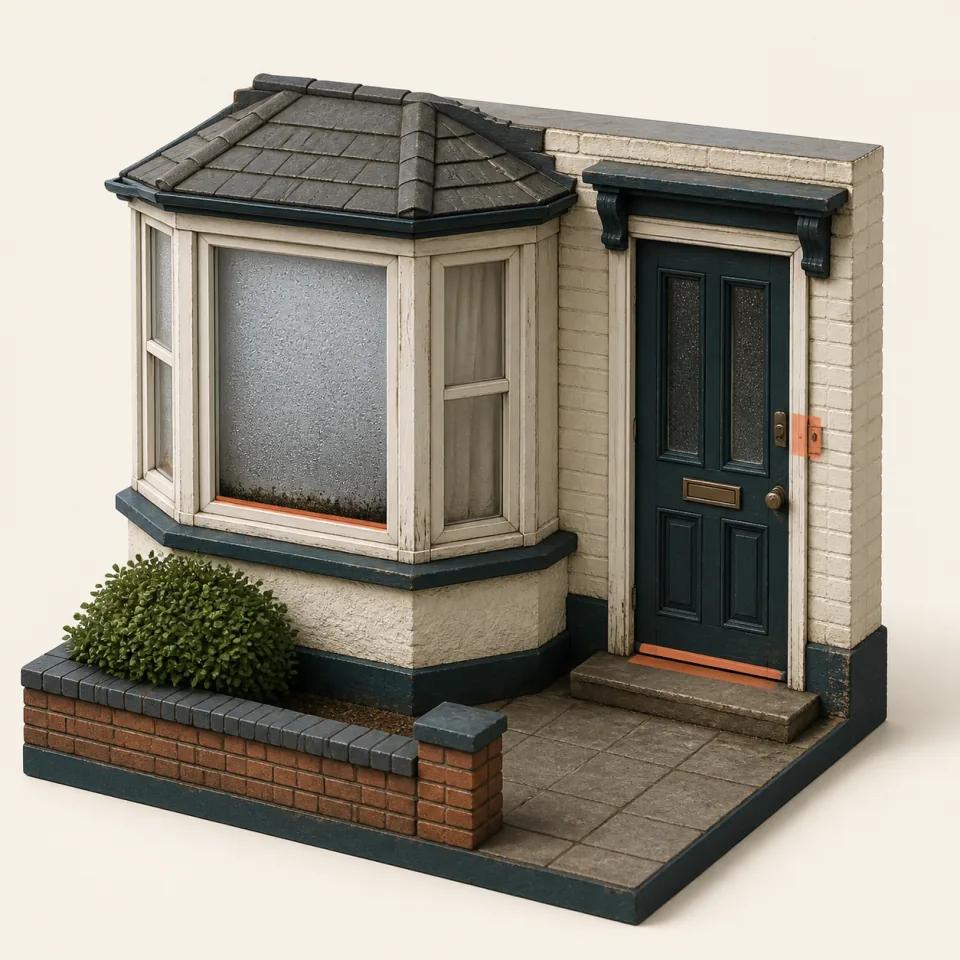
Operation, locks, seals, condensation position, frame condition, glazing, and draught gaps.
Condensation appears between the front bay panes; lower frame is weathered; light is visible beneath the front door.
Follow up: Open permitted examples and ask what is included, warranted, repaired, or awaiting replacement.
Noise and daylight
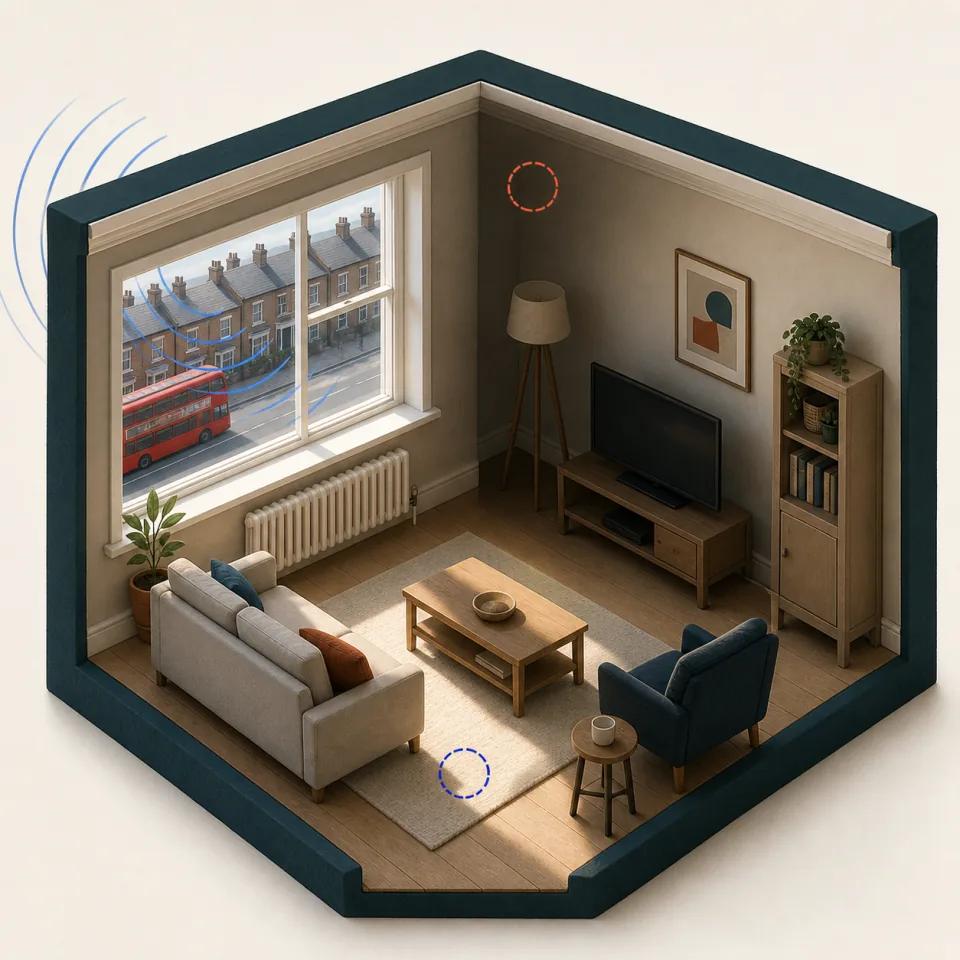
Sound source, time of visit, room, outlook, shading, and natural light with artificial lights off.
Road traffic was audible in the front room at 16:30; inner corner remained dim with the room lights off.
Follow up: Pause in several rooms and, if important, revisit at another day or time.
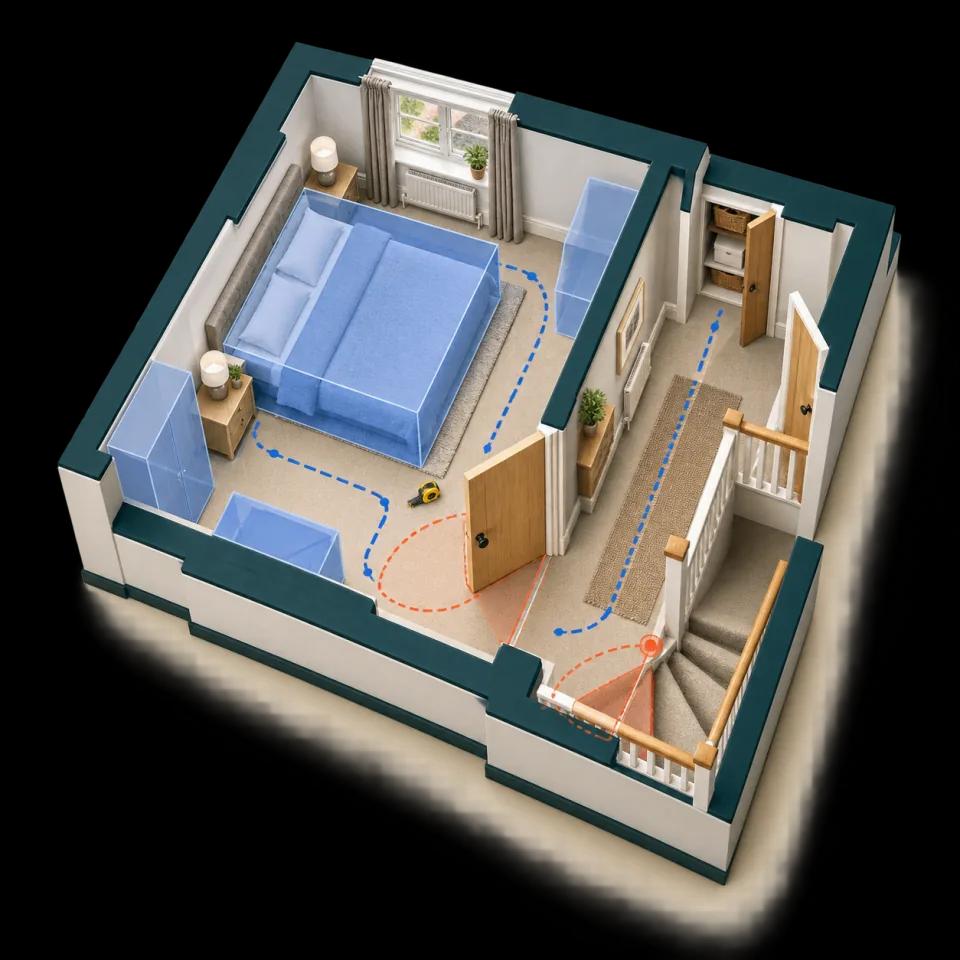
Layout and storage
Furniture routes, door swings, usable dimensions, storage depth, circulation, stairs, and awkward access.
Double-bed footprint leaves a narrow route to the wardrobe; stair turn may restrict larger furniture.
Follow up: Measure critical spaces and compare them with furniture and accessibility needs.
Statements kept separate from evidence

Tenure and lease details
What the seller or agent said, which document supports it, and what remains unseen or unverified.
Agent described the property as leasehold; lease and title documents were not seen at the viewing.
Follow up: Keep the statement separate and ask your conveyancer to verify tenure, term, rights, and restrictions.

Charges and planned works
Amount source and date, statement period, reserve fund, planned works, notices, and documents not yet received.
Agent quoted a service charge verbally; current statement, reserve-fund position, and planned-works notice were not seen.
Follow up: Request dated documents and have your conveyancer check liabilities and planned works.
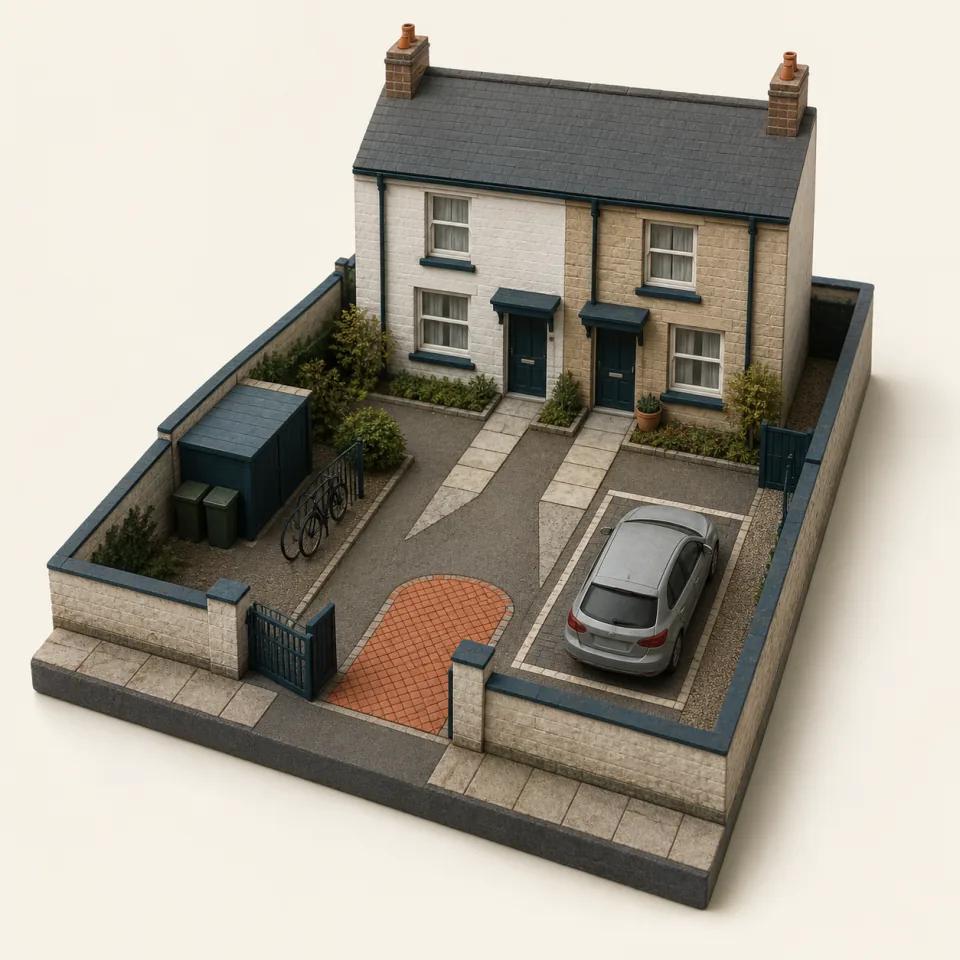
Access and parking
Observed boundaries, shared routes, gates, bay layout, turning space, bins, cycles, and delivery access.
Drive appears shared; one bay is marked; bin route crosses the narrow entrance between boundary walls.
Follow up: Record the arrangement, then ask your conveyancer to verify ownership, rights, restrictions, and allocated parking.
Keep observation separate from conclusion
Write “brown mark below rear bedroom window” rather than “roof leak.” Write “agent said boiler serviced last year; certificate not seen” rather than “boiler serviced.” Precise observations help a surveyor, conveyancer, tradesperson, lender, insurer, or seller understand what needs checking. An unsupported diagnosis can send comparison in the wrong direction.
Government guidance says buyers should consider an independent survey. Survey type should fit the property and circumstances. Your record can focus later questions, but it cannot reveal concealed defects or replace inspection by a suitably qualified professional.
After the viewing
Add a short follow-up beside every uncertain item: request a document, revisit at another time, ask a professional, measure a space, or confirm what remains in the sale. Then enter only cost figures you control or have obtained. Keep purchase tax, legal work, survey, mortgage costs, removals, urgent work, furnishings, and reserve as separate lines.
Do not turn an estimate into a fact. Label its source and date. Tax, lending, insurance, service charges, and repair costs can depend on personal circumstances and can change. Confirm current figures with official guidance and relevant professionals before committing.
Compare records, then verify
Compare the same categories across shortlisted homes. Count unresolved follow-ups. Look at the difference between asking price and your entered first-year cash requirement. Revisit emotional judgements after the factual record is complete. A lower-priced home can still carry more immediate work or uncertainty; a polished home can still have missing documents or unsuitable ongoing costs.
Before making an offer, read our questions to ask at a house viewing and create a first-year home-buying cost record.
Primary sources
- GOV.UK: deciding on a home, surveys, EPCs, and property checks
- GOV.UK: How to buy a home
- RICS: damp and mould consumer guide
- Electrical Safety First: RCDs and visible electrical context
Last reviewed 20 September 2026. England-focused; processes differ elsewhere in the UK.