
What to check during the viewing
Ask the seller or agent to describe the main heat source, hot-water arrangement, controls, fuel, and any separate systems. Record model details and installation position only where safely visible. With permission, observe a normal control demonstration and whether selected radiators begin to warm; never reset, bleed, repressurise, remove covers, or start an unfamiliar appliance. Note leaks, corrosion, damaged controls, unusual noise, portable heaters, or rooms without visible emitters. Then request the EPC, service history, installation paperwork, warranties, and any relevant gas-safety evidence. An EPC estimates energy performance; it does not certify current appliance condition or prove actual bills.
Reference example
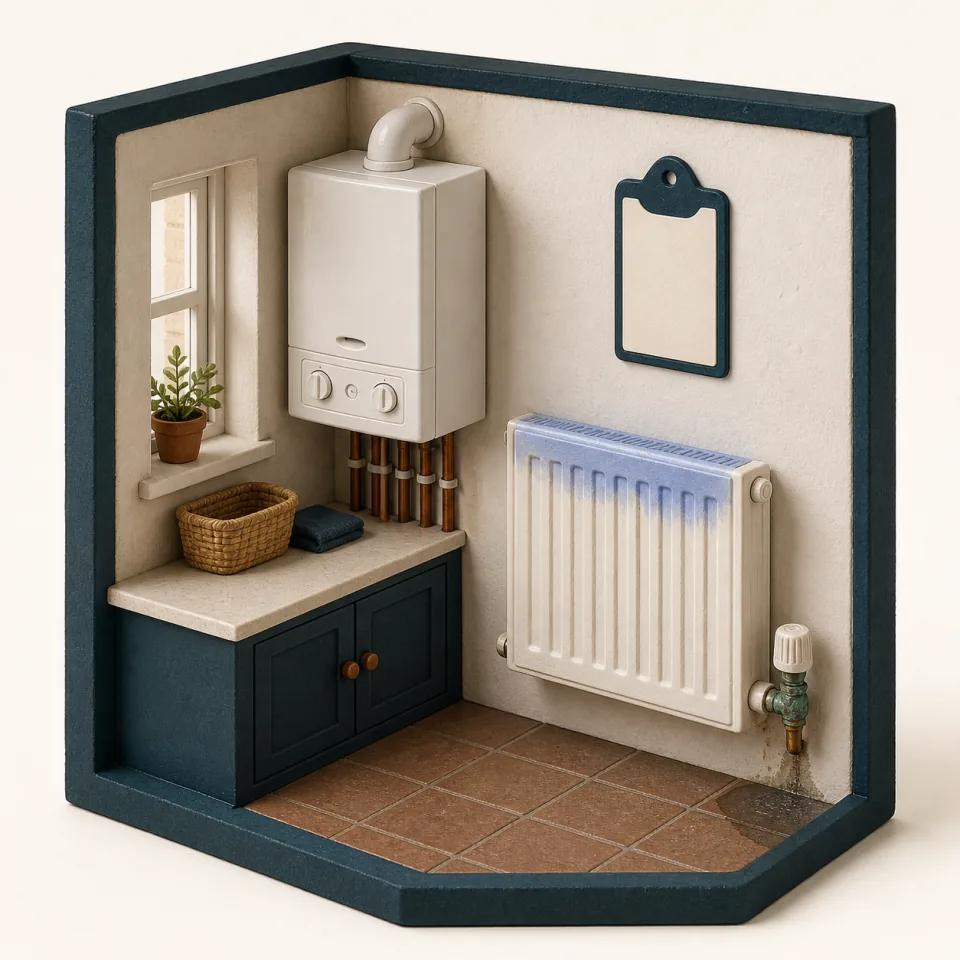
Heating and hot water
Heat source and controls, radiator response, corrosion, water marks, and service evidence actually seen.
Radiator valve is corroded with a mark below; top section stayed cool during the permitted test; service record not seen.
Follow up: Ask when system last ran, what is serviced, and which records or warranties can be provided.
Use a consistent sequence
- Describe the whole arrangement. Record whether heating appears to use a boiler, heat pump, storage heaters, direct electric units, stove, communal plant, or a combination. Note cylinder, tank, thermostat, programmer, radiator, underfloor, and meter locations where visible. Keep seller terminology attributed until documents confirm system type and ownership responsibilities.
- Observe one normal demonstration. Ask the agent to operate controls if a demonstration is permitted. Record starting condition, selected setting, approximate wait, which emitters were checked, and whether hot water was already stored. A cold radiator during a short visit may have several explanations. Do not convert a partial test into a pass or failure.
- Check visible condition and context. Look for drips, staining, corrosion, loose valves, damaged flues or vents, error displays, disconnected controls, portable heaters, boxed-in equipment, and poor access for maintenance. Do not touch hot surfaces or combustion equipment. Note rooms whose comfort cannot be tested and whether windows or doors were open.
- Build the evidence request. Ask for the current EPC, commissioning and installation records, recent service invoices, warranties, repair history, fuel account context, and instructions. For gas appliances, use Gas Safe Register guidance and a registered engineer for safety checks. For communal systems, request charge, maintenance, metering, and responsibility details through proper transaction channels.
What to put in the record
- Record system descriptions, equipment labels, control locations, and visible condition without copying personal account or meter identifiers.
- Log the exact permitted demonstration and its limits: duration, starting state, outlets or emitters observed, and unavailable rooms.
- Save EPC rating and recommendations as dated document facts, separate from seller claims and actual energy-use estimates.
- List service, installation, repair, warranty, and communal-system documents requested, received, or still missing.
Questions for the seller or agent
- What provides space heating and hot water, when was each major component installed, and who owns or maintains communal equipment?
- When was the system last serviced or inspected, what faults or repairs occurred, and can the complete records be supplied?
- Are any rooms difficult to heat, controls disconnected, appliances excluded from sale, or upgrades already recommended or planned?
What this viewing check cannot establish
Do not remove appliance panels, relight equipment, alter pressure, bleed radiators, obstruct vents, test combustion, or assume an operating demonstration proves safety. Gas Safe Register advises buyers to arrange gas-appliance safety checks by a registered engineer where suitable evidence is unavailable.
EPCs provide a standardised energy-performance record and recommendations, not a guarantee of comfort, tariff, consumption, or equipment condition. Bills depend on occupants, weather, controls, and prices. Keep any running-cost estimate labelled with its source, period, assumptions, and date.
When to get professional help
Where documentation is missing, visible leakage or damage appears, equipment reports errors, or planned use changes system demand, ask an appropriately registered heating professional to inspect before commitment. Give them your system map and observation record. Ask the surveyor about building fabric and ventilation alongside heating; system and property performance should not be considered in isolation.
Continue the property record
Return to the complete UK property viewing checklist or review a connected check:
Use this check in the next decision
Keep the observation attached when you revisit, ask follow-up questions, or compare shortlisted homes:
- Second Viewing Checklist for UK Buyers
- Questions to Ask After a House Viewing
- How to Compare Property Viewings
Apply the same twelve checks with property-specific emphasis:
Primary sources
- GOV.UK: Energy Performance Certificates
- GOV.UK: find an energy certificate
- Gas Safe Register: homebuyer gas-safety guide
Last reviewed 9 September 2026. England-focused general information; property, transaction, and professional requirements differ.