
What to check during the viewing
Look without dismantling or touching damaged equipment. Record cracked or discoloured socket faces, loose fittings, exposed conductors, improvised extensions, trailing cables, scorch-like marks, missing covers, and visible damage around switches or lights. Locate the consumer unit only if it is safely accessible and note what can be seen without opening secured parts. Ask whether a recent Electrical Installation Condition Report, installation certificates, and remedial-work records exist. A neat-looking installation is not proof of safety, and a standard home survey does not replace specialist electrical inspection.
Reference example
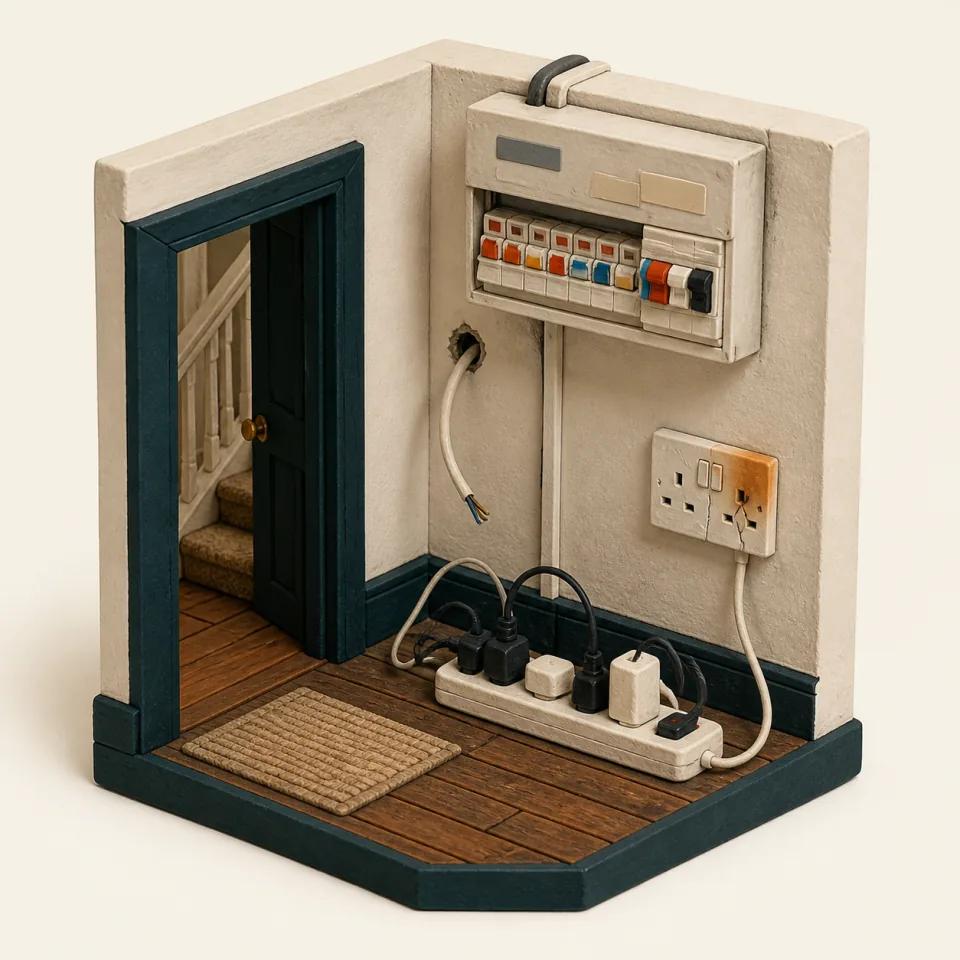
Electrics
Visible consumer-unit condition, damaged socket faces, heat marks, temporary wiring, and overloaded extensions.
Socket face is cracked with a brown mark above the switch; loose cable ends beside the consumer unit.
Follow up: Do not touch damaged fittings. Ask for current electrical records and use a qualified electrician for safety checks.
Use a consistent sequence
- Scan rooms consistently. Use the same route in every property: entrance, living spaces, kitchen, bathrooms, bedrooms, utility areas, garage, and outside supply points. Note the number and position of sockets only where it affects intended use, then record visible wear, damage, heat marks, adapters, extensions, or temporary cables by room.
- Observe without testing. Do not remove socket plates, touch bare wires, open sealed equipment, operate unknown isolators, or improvise tests. If a fitting is broken, hot, buzzing, wet, or visibly exposed, step away and tell the agent. Record the condition and exact location rather than attempting to prove whether it is live.
- Record consumer-unit context. If the consumer unit is visible and access is permitted, photograph its outside and labels. Note location, apparent damage, missing blanks, unclear labelling, and whether the seller or agent says residual current protection is present. Do not treat appearance, enclosure material, or switch labels as an electrical assessment.
- Ask for dated electrical evidence. Request the latest EICR and certificates for rewiring, a replacement consumer unit, new circuits, or other electrical work. Record report date, inspected property, stated outcome, and any remedial evidence. Keep verbal claims separate until the actual document has been reviewed by someone qualified to interpret it.
What to put in the record
- Photograph visible damage in room context and close detail, where permission allows, without touching or moving the fitting.
- List electrical documents requested, received, dated, and still missing; an agent’s statement is not the report itself.
- Note rooms or outbuildings not accessed and fittings hidden behind furniture as “not checked.”
- Record whether smoke or heat alarms were visible, but do not claim they are correctly placed, interconnected, in date, or operational without proper verification.
Questions for the seller or agent
- When was the installation last inspected, and can the complete EICR plus evidence of any remedial work be supplied before commitment?
- Which electrical work has been completed or altered, who carried it out, and what installation or building-control certificates are available?
- Are there known faults, frequently tripping circuits, damaged fittings, disconnected equipment, or electrical work planned before completion?
What this viewing check cannot establish
A buyer’s visual check cannot determine earthing, bonding, circuit loading, insulation condition, concealed wiring, RCD performance, or compliance. Do not describe an installation as safe or unsafe from appearance alone. Record signs and documents, then ask a registered electrician to inspect and test where evidence is missing or concerns exist.
Electrical Safety First advises buyers to look for visible wear, identify whether RCD protection is present, and check for a recent EICR. It also explains that electrical checks are not normally part of a standard home survey. Treat this page as preparation for qualified inspection, not a substitute for one.
When to get professional help
Where no recent EICR exists, documents are incomplete, visible damage appears, or planned use would add significant load, discuss scope with a registered electrician before exchange or another binding commitment. Give them your room references and photographs, then record their report separately from seller statements and rough cost assumptions.
Continue the property record
Return to the complete UK property viewing checklist or review a connected check:
Use this check in the next decision
Keep the observation attached when you revisit, ask follow-up questions, or compare shortlisted homes:
- Second Viewing Checklist for UK Buyers
- Questions to Ask After a House Viewing
- How to Compare Property Viewings
Apply the same twelve checks with property-specific emphasis:
Primary sources
- Electrical Safety First: advice for home buyers
- RICS: house surveys, types, costs, and benefits
- GOV.UK: use a competent person scheme
Last reviewed 9 September 2026. England-focused general information; property, transaction, and professional requirements differ.