
What changes for this property type
When viewing a flat, use the same twelve property checks as for any home, then extend the route through communal entrance, halls, stairs, lift, roof or façade areas visible from safe positions, bin and cycle stores, parking, gardens, access controls, and shared plant. Record the stated tenure, remaining lease term, service charge, reserve fund, ground rent, managing agent, planned works, building insurance, and restrictions as unverified until documents arrive. Ask the conveyancer to review the lease, title, management pack, accounts, notices, and seller forms. A tidy communal hall or low quoted charge does not prove sound management or future cost.
Priorities within the same twelve checks
Give these checks extra attention

Map the lease to real spaces
List flat, balcony, windows, front door, loft or cellar space, parking, store, garden, corridors, stairs, lift, roof, walls, and service routes. Record who the seller or agent says maintains each. Then flag the lease, title, transfer, plan, or management document needed to verify inclusion, repair responsibility, access rights, and restrictions. “Share of freehold” does not remove need to read the lease or understand company and management arrangements.

Separate current charges from future work
Write every quoted service, estate, insurance, heating, parking, and ground-rent amount with period and source. Ask for recent actual charges, current budget, accounts, reserve information, year-end adjustments, consultations, major-work notices, and management changes. Observe façade, roof, windows, lift, decoration, access, drainage, and shared plant only from permitted areas. Visible condition guides questions; it cannot establish reserve adequacy, liability, or timing.

Listen beyond the flat door
Pause in bedrooms and living space, then record corridor doors, lifts, plant, waste collection, traffic, neighbouring floors, and entrance activity. Include time, window position, people present, and ventilation. Note outlook, privacy, orientation if verified, balcony or building obstruction, and artificial lights left on. Revisit at a contrasting time when noise, daylight, or communal movement could change the decision.
Walk shared daily routes
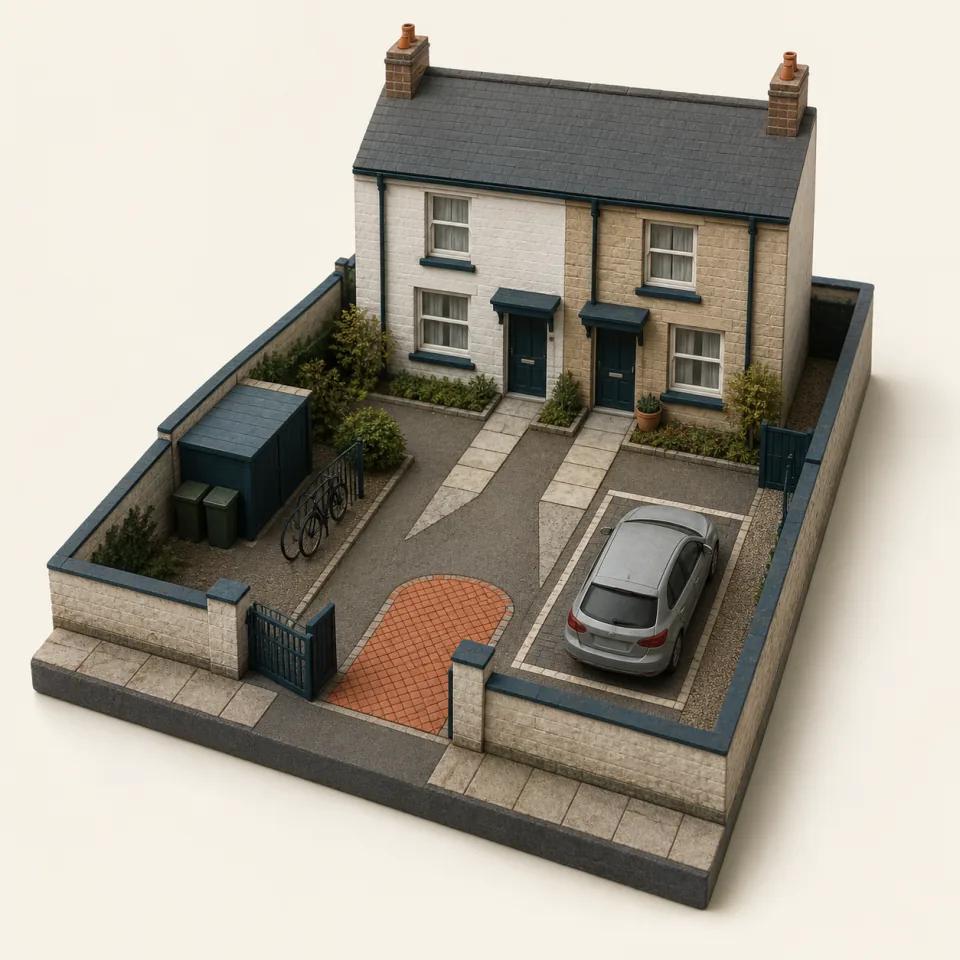
Trace street, gate, entrance, lift or stair, flat door, parking, bins, bikes, deliveries, post, and any outdoor space. Record steps, heavy doors, narrow turns, fobs, permits, lighting, maintenance, and locked areas without collecting codes or resident information. Ask which rights are included and who pays for shared elements. Physical access during a viewing does not prove legal entitlement or long-term control.
Evidence to preserve
- Record flat condition and communal condition separately, with exact floor, room, elevation, shared feature, and access limits.
- Keep listing claims, spoken answers, lease wording, management documents, survey findings, and conveyancer conclusions as different dated evidence types.
- Normalise each current charge to a comparison period while preserving original amount, frequency, inclusions, estimate or final status, and source.
- Log proposed works by stage: mentioned, investigated, consulted, approved, contracted, underway, completed, or unsupported.
- Photograph communal areas only with permission and never capture residents, post, access codes, vehicle registrations, or security detail.
Questions for the next stage
- What tenure and lease term are stated, and are lease extension, enfranchisement, shared ownership, or freehold-company changes underway?
- What were recent actual charges, what is budgeted now, what reserves exist, and which major or building-safety works are discussed or noticed?
- Which restrictions affect pets, letting, alterations, floor coverings, work from home, parking, storage, balcony use, or charging?
- Who manages, repairs, insures, and pays for the roof, structure, windows, doors, lift, plant, access, drains, grounds, road, parking, and stores?
Professional and safety boundaries
This checklist does not interpret leases, title, statutory rights, service-charge reasonableness, building-safety duties, lender requirements, or future bills. England-focused GOV.UK guidance provides general context; actual position depends on documents, building, transaction, and professional review.
Do not question residents using private details, tailgate controlled doors, inspect locked plant, or publish management records. Use a suitable surveyor for physical condition and a conveyancer for title, lease, management, charge, restriction, dispute, and transaction questions. Add specialist advice where their scope recommends it.
Compare every property type consistently
Context changes emphasis, not the twelve-check structure. Return to the complete UK property viewing checklist and record every unchecked item explicitly.
Primary sources
- GOV.UK: How to lease
- GOV.UK: leasehold service charges and expenses
- GOV.UK: leaseholder rights and responsibilities
Last reviewed 9 September 2026. England-focused general information; property, transaction, and professional requirements differ.