
What to check during the viewing
Start far enough from the building to see the complete roofline, then change position to view the front, rear, and any extensions where access permits. Look for covering that sits out of line, a ridge or roof plane that appears uneven, damaged rainwater goods, staining below joints, and areas whose colour or material suggests a repair. These signs do not establish a defect or its cause. They identify locations worth recording and raising with the seller, agent, and surveyor.
Reference example
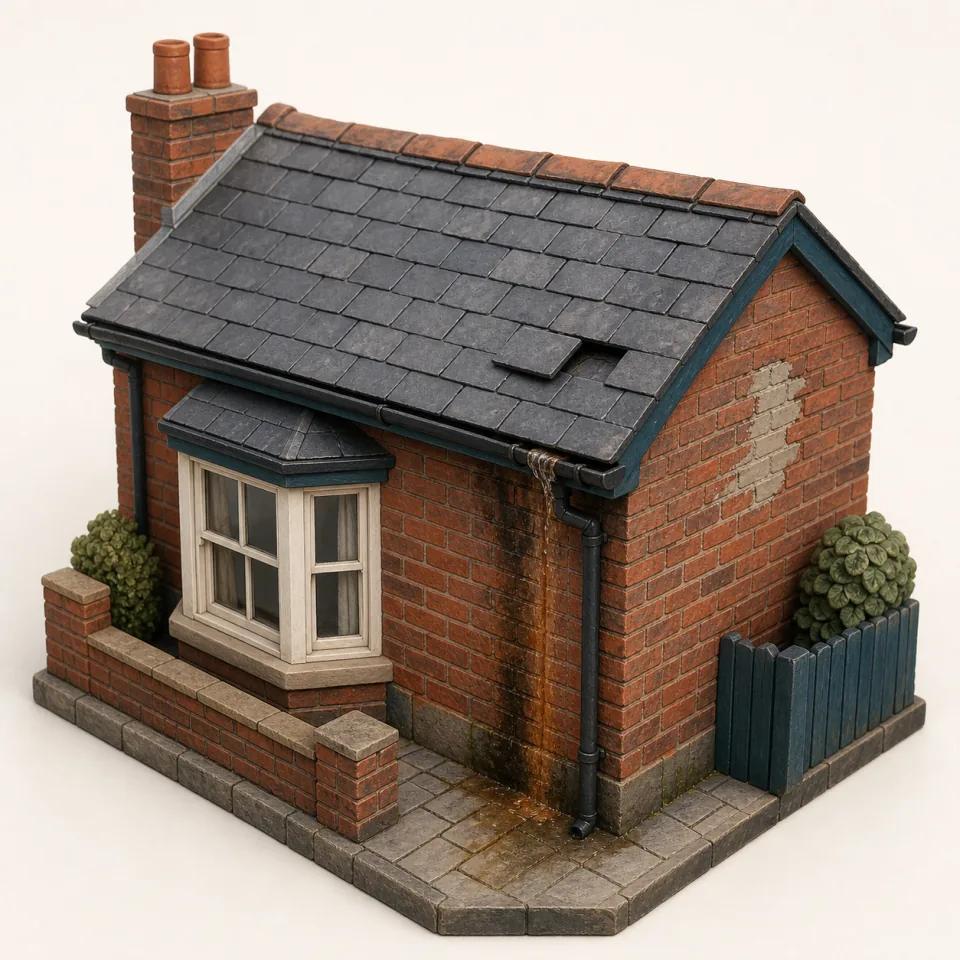
Roof and exterior
Roof covering, gutter joints, staining, and repair patches visible from permitted ground-level areas.
One slate sits out of line above the front bay; dark staining runs below the right gutter joint.
Follow up: Ask what was repaired and whether invoices, reports, or guarantees exist.
Use a consistent sequence
- Capture the viewing conditions. Record the date, weather, light, and positions from which the roof was visible. Note any elevation hidden by adjoining buildings, trees, scaffolding, parked vehicles, or viewing restrictions. A dry viewing can show staining but cannot demonstrate how gutters and downpipes behave during rain.
- Scan the roof covering and line. From ground level, note tiles or slates that appear missing, cracked, lifted, or different from those around them. Record any visible dip, curve, or uneven junction without naming a structural cause. Include location references such as front bay, rear extension, left verge, or chimney side.
- Follow the rainwater route. Trace visible gutters, joints, outlets, and downpipes. Look for gaps, vegetation, staining, corrosion, displaced sections, or water marks on the wall below. Where ground access is allowed, record whether the pipe appears to discharge into a gully and whether that area is blocked or holding water.
- Separate repairs from proof. Newer tiles, mortar, flashing, render, or paint can show that work occurred, but appearance does not prove why it was done or whether it succeeded. Record the visible change, then request the date, scope, contractor details, invoice, guarantee, approval, or report that supports the explanation given.
What to put in the record
- Take one wide image showing the roof area in context and one closer image of each visible concern, only where photography is permitted.
- Label every note by elevation and feature so a surveyor can find the same location without interpreting vague phrases such as “roof looks bad.”
- Record inaccessible or obscured areas as “not checked” instead of treating silence as a clear result.
- Keep seller or agent statements in quotation or attribution form until documents or professional inspection support them.
Questions for the seller or agent
- What roof, chimney, gutter, or leak-related work has been completed, when was it done, and which invoices or guarantees are available?
- Has any roof area, loft space, or rainwater defect been identified in a previous survey, insurance claim, or maintenance report?
- Will the surveyor have safe access to the loft, visible roof areas, extensions, and any relevant drainage points?
What this viewing check cannot establish
Do not climb onto roofs, ladders, walls, bins, or neighbouring land during a viewing. Do not move coverings, open secured loft hatches, or touch loose materials. A phone zoom or binoculars can improve a ground-level record but cannot reveal concealed construction, hidden decay, or performance during bad weather.
Avoid converting appearance into a diagnosis. A displaced slate, stained wall, uneven line, or repair patch can have several explanations. Write what was visible and where. Ask a qualified surveyor to assess condition, likely cause, urgency, access limits, and any need for specialist investigation.
When to get professional help
Give the surveyor your labelled observations before inspection and ask for the roof concern to be addressed in the agreed scope. RICS explains that survey level should match the property’s age, condition, complexity, and buyer needs. If access or visibility limits the survey, ask what further inspection is recommended before exchange or another binding commitment.
Continue the property record
Return to the complete UK property viewing checklist or review a connected check:
Use this check in the next decision
Keep the observation attached when you revisit, ask follow-up questions, or compare shortlisted homes:
- Second Viewing Checklist for UK Buyers
- Questions to Ask After a House Viewing
- How to Compare Property Viewings
Apply the same twelve checks with property-specific emphasis:
Primary sources
- RICS: house surveys, types, costs, and benefits
- Historic England: home maintenance checklist
- GOV.UK: deciding on a home
Last reviewed 9 September 2026. England-focused general information; property, transaction, and professional requirements differ.