
What to check during the viewing
Pause silently in the rooms that matter most, first with windows as found and then in an agreed normal position. Record the time, duration, weather, traffic, construction, people present, mechanical equipment, and distinct sounds you notice. For daylight, note orientation if known, window and obstruction context, which lights were on, and whether main activities would need artificial light at that time. Look from working height and seated positions without photographing neighbours. Government strategic noise maps model long-term transport noise and can guide questions, but they are not a measurement of a specific room at a particular moment.
Reference example
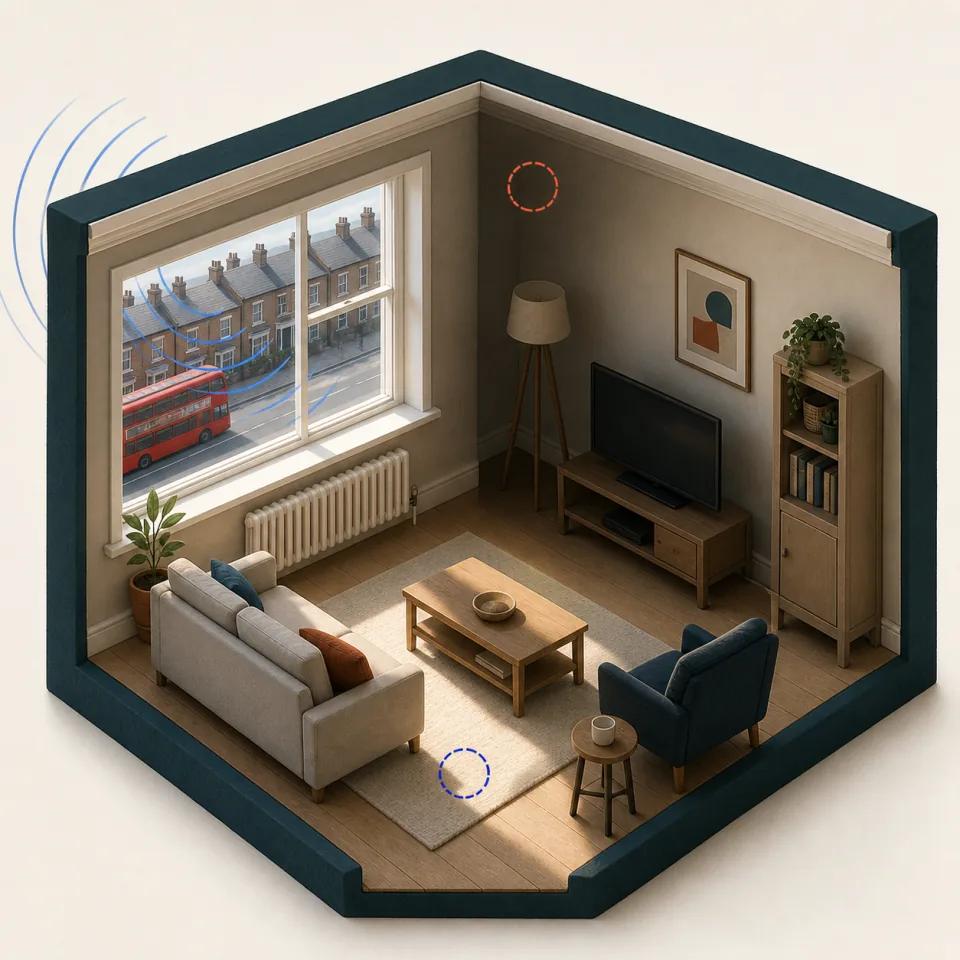
Noise and daylight
Sound source, time of visit, room, outlook, shading, and natural light with artificial lights off.
Road traffic was audible in the front room at 16:30; inner corner remained dim with the room lights off.
Follow up: Pause in several rooms and, if important, revisit at another day or time.
Use a consistent sequence
- Set observation conditions. Record date, start time, weather, season, appointment activity, open or closed windows, mechanical ventilation, lights, blinds, curtains, and nearby works. A bright summer afternoon or quiet weekend appointment should not be treated as a complete picture of mornings, evenings, winter daylight, or weekday transport.
- Listen by room and source. Pause in bedrooms, main living space, garden or balcony, and any workspace. Describe audible source, frequency during the sample, and whether closing a permitted window changed it. Separate road, rail, aircraft, school, venue, communal door, lift, plant, plumbing, and internal floor noise where possible without claiming legal nuisance.
- Record daylight and outlook. Note which rooms receive direct sun, diffuse daylight, borrowed light, or heavy obstruction during the visit. Record window direction only when verified, nearby buildings or trees, privacy screens, deep balconies, room depth, and artificial lights left on. Daylight impression is personal and time-specific, not a formal assessment.
- Plan a contrasting visit. If noise or light affects a decision, revisit at a meaningfully different time and walk the immediate public area. Review official transport-noise information and local planning records where relevant. Ask the seller factual questions, but preserve answers as attributed statements rather than proof of future conditions.
What to put in the record
- Create one timed entry per important room, including window position, lights, audible sources, interruptions, and observation duration.
- Take room-facing photographs only with permission; avoid people, neighbouring interiors, vehicle registrations, and private security details.
- Record map or planning evidence by source and date, recognising that modelled or historic data may not reflect viewing conditions.
- Keep personal comfort notes distinct from observable facts so two buyers can compare both without overwriting each other.
Questions for the seller or agent
- What recurring road, rail, aircraft, venue, school, delivery, communal, neighbour, or building-services noise has the seller noticed?
- Are there planned developments, works, access changes, or communal equipment repairs that could alter noise, outlook, or daylight?
- Which rooms receive useful daylight at different seasons, and can another viewing be arranged at a contrasting time?
What this viewing check cannot establish
Do not use a phone sound-meter reading as a professional acoustic assessment or a legal conclusion. Defra explains that strategic maps model annual exposure and may not match conditions at a location on a given day. Use them to identify follow-ups, then seek specialist assessment if the decision depends on performance.
A viewing cannot predict every neighbour, event, flight path, seasonal tree canopy, future development, or daylight condition. Do not record identifiable neighbours or confront residents. Planning guidance and daylight assessments serve defined purposes; a personal viewing note is not a rights-to-light, planning, or building-performance opinion.
When to get professional help
Arrange a repeat visit and consider an acoustic or daylight specialist when a specific concern could change use of the home and ordinary observations remain inconclusive. Ask the conveyancer about disclosed disputes and relevant searches, and review planning material through official channels. Keep professional conclusions linked to their scope, date, assumptions, and measured conditions.
Continue the property record
Return to the complete UK property viewing checklist or review a connected check:
Use this check in the next decision
Keep the observation attached when you revisit, ask follow-up questions, or compare shortlisted homes:
- Second Viewing Checklist for UK Buyers
- Questions to Ask After a House Viewing
- How to Compare Property Viewings
Apply the same twelve checks with property-specific emphasis:
Primary sources
- GOV.UK: explaining England's strategic noise maps
- GOV.UK: effective use of land and daylight
- GOV.UK: deciding on a home
Last reviewed 9 September 2026. England-focused general information; property, transaction, and professional requirements differ.