
What to check during the viewing
Walk around the outside and inside in the same order. Note cracks through brick, render, plaster, tiles, or joints; walls that appear bowed; floors that feel uneven; and doors or windows that bind or sit out of square. Photograph each sign in room or elevation context, then closer with a familiar object for scale where permission allows. One hairline finish crack does not prove movement, while a larger or repeated pattern still does not identify cause. Trees, drainage, alterations, materials, workmanship, temperature, and historic settlement can all matter. Preserve what is visible and ask an appropriately qualified surveyor to interpret it.
Reference example
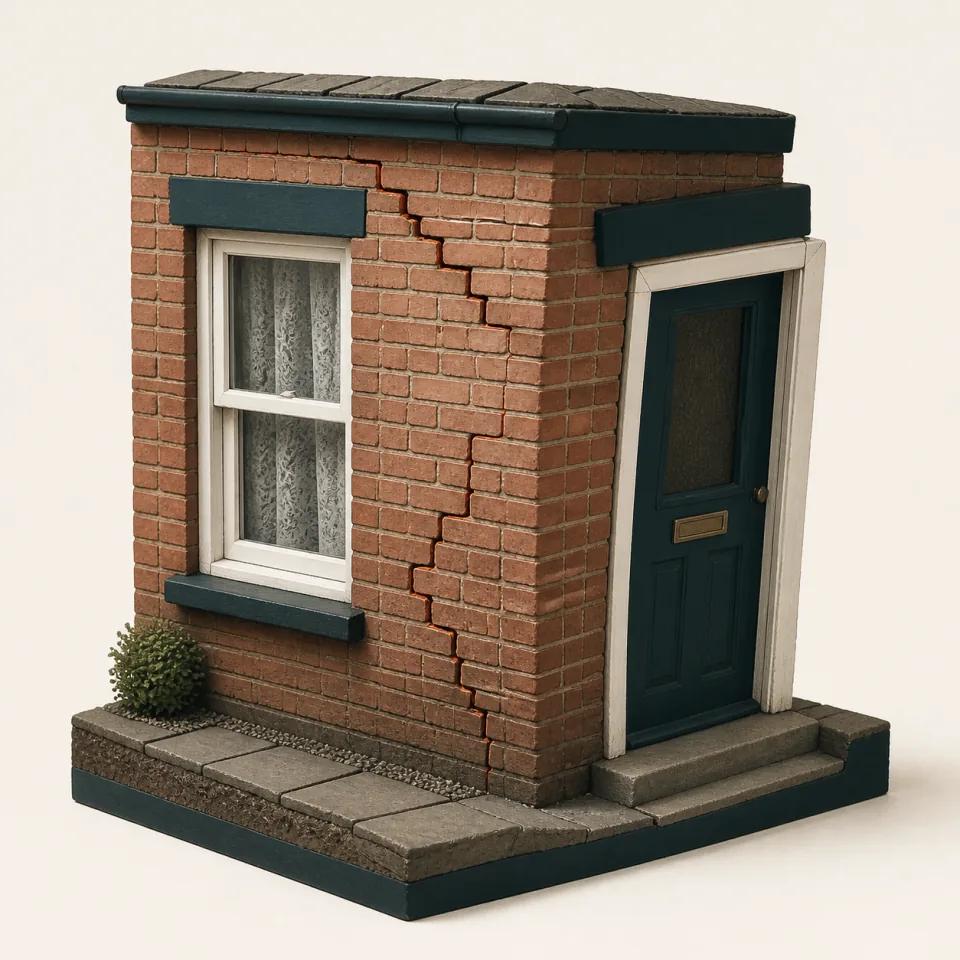
Walls and movement
Crack position and shape, bulges, and openings that do not appear square.
Stepped crack follows mortar joints from the upper window corner; front door frame appears out of square.
Follow up: Record the exact location and ask what reports or repairs exist; leave cause to a qualified surveyor.
Use a consistent sequence
- Map outside signs first. From permitted ground-level positions, scan corners, window and door openings, extensions, bay windows, parapets, retaining walls, and junctions between different materials. Record whether a crack is stepped, vertical, horizontal, diagonal, or follows a joint. Name the elevation and nearby feature instead of writing only “crack outside.”
- Repeat the route indoors. Check the same approximate locations inside, including ceilings, wall junctions, chimney breasts, openings, and transitions between the original building and additions. Note fresh filler, local repainting, torn wallpaper, separated trim, or tiles cracked in a line as context. Decoration alone neither confirms nor conceals structural movement.
- Observe openings and levels. Ask before opening representative doors and windows. Record binding, gaps, loose frames, distorted reveals, or a latch that does not meet cleanly. Note visibly sloping or springy floors without rolling objects, using phone levels as proof, or forcing fittings. Operation can be affected by hinges, moisture, decoration, or installation as well as movement.
- Request history, not reassurance. Ask when each sign appeared, whether it changed, and whether monitoring, insurance claims, drainage work, tree work, underpinning, or structural alterations occurred. Request surveys, engineer reports, approvals, warranties, invoices, and dated monitoring records. Attribute every verbal explanation until documents and independent inspection support it.
What to put in the record
- Take one wide photograph locating each sign and one close image that preserves scale, only with permission.
- Record surface, direction, approximate length and width, nearby opening, floor level, and whether the sign continues through another material.
- Mark furniture-covered, rendered, recently decorated, inaccessible, or poorly lit areas as not checked.
- Keep seller statements, old reports, new professional findings, and your observations as separate entries with dates and sources.
Questions for the seller or agent
- When was the cracking or distortion first noticed, has it changed, and are dated photographs or monitoring records available?
- Have there been insurance claims, structural repairs, underpinning, drainage failures, tree work, extensions, removed walls, or engineer investigations?
- Which approvals, calculations, completion documents, guarantees, surveys, and repair invoices can the seller provide?
What this viewing check cannot establish
RICS explains that cracks can have many causes and that warning signs may include cracks around openings, sticking doors or windows, and distortion. These are prompts for investigation, not a reliable do-it-yourself subsidence test. Do not classify severity or predict repair scope from a viewing photograph.
Do not remove finishes, probe cracks, lift flooring, force openings, enter unsafe areas, or contact neighbours about the property. A mortgage valuation is not a detailed condition survey. Choose survey and specialist scope appropriate to the building, visible signs, proposed work, and transaction timetable.
When to get professional help
Send the surveyor a location list and photographs before inspection. Ask whether the pattern needs further monitoring, drainage investigation, arboricultural input, structural-engineer review, or historic records. If movement is suspected, seek independent professional evidence before relying on a repair quotation, warranty, or seller description, and discuss transaction implications with your conveyancer and insurer where relevant.
Continue the property record
Return to the complete UK property viewing checklist or review a connected check:
Use this check in the next decision
Keep the observation attached when you revisit, ask follow-up questions, or compare shortlisted homes:
- Second Viewing Checklist for UK Buyers
- Questions to Ask After a House Viewing
- How to Compare Property Viewings
Apply the same twelve checks with property-specific emphasis:
Primary sources
- RICS: subsidence consumer guide
- RICS: house surveys, types, costs, and benefits
- GOV.UK: deciding on a home
Last reviewed 9 September 2026. England-focused general information; property, transaction, and professional requirements differ.