
What to check during the viewing
Ask permission before operating taps, showers, toilets, or appliances. Start with a cold tap, then observe hot-water delivery only if the system is available for a normal demonstration. Record whether flow appears steady, whether basins empty normally, and whether visible pipework or cupboards show active drips, corrosion, swelling, staining, or recent repairs. Pressure and flow are related but different, and both can vary with property height, plumbing layout, stored-water systems, appliance use, and demand on the mains. A short test identifies follow-ups; it does not establish system capacity or condition.
Reference example
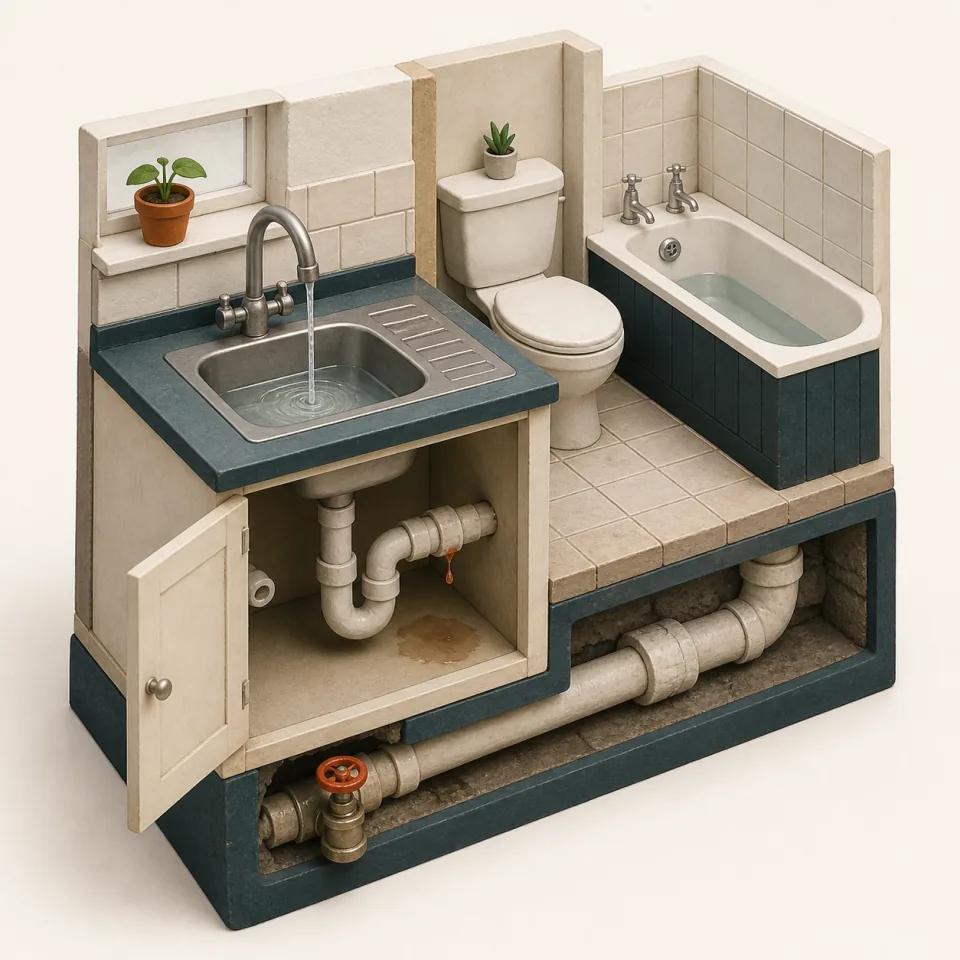
Plumbing and water pressure
Tap flow, drainage speed, visible joints, stains, drips, accessible pipes, and stopcock location.
Kitchen tap flow was weak; basin drained slowly; one drip and a fresh-looking mark were visible below the sink joint.
Follow up: Ask whether water was isolated or work is planned, and arrange a plumbing check where needed.
Use a consistent sequence
- Define the permitted test. Ask which outlets may be used and whether water or heating has been isolated. Record the time and any explanation given. Do not turn valves, restore supplies, start unfamiliar boilers, run uncommissioned appliances, or access locked plant areas. An unavailable test belongs in the record as “not checked.”
- Observe flow at useful points. Where allowed, run the kitchen cold tap and one upper-floor outlet separately. Note location, approximate duration, steadiness, obvious change, unusual noise, and whether another outlet or appliance was operating. Avoid labelling flow “good” or “bad” without measured context or the needs of intended fixtures.
- Watch drainage and visible joints. Let permitted basins or sinks drain, then inspect only accessible areas without dismantling panels. Record slow emptying, gurgling, odour, fresh droplets, staining, swollen cabinet material, corrosion, sealant condition, and signs of earlier repair. Do not open traps, move fixed panels, or reach near unsafe services.
- Trace statements to documents. Ask about leaks, supply-pipe work, stop-tap location, water-softening equipment, shared supplies, drainage blockages, and plumbing insurance claims. Request invoices, guarantees, service records, or investigation reports. Record who provided each answer and which evidence was unavailable at the viewing.
What to put in the record
- Record outlet, floor, hot or cold setting, test duration, concurrent water use, and whether flow changed during the permitted test.
- Photograph accessible stains, joints, corrosion, or cabinet damage in context and close detail without moving pipes or stored personal items.
- Note visible water-system type and seller description as observations only; do not infer pressure, capacity, compliance, or remaining service life.
- Keep repair estimates separate from confirmed quotations and include source and date for every cost figure.
Questions for the seller or agent
- Have there been leaks, bursts, low-flow complaints, drainage blockages, supply interruptions, insurance claims, or pipe replacements, and what evidence is available?
- Where are internal and external stop taps, is any supply shared, and which party maintains each section of visible or described pipework?
- Can a plumber assess the observed flow, drainage, leaks, stored-water arrangement, and suitability for planned bathrooms or appliances before commitment?
What this viewing check cannot establish
Do not assume a weak-looking stream proves low mains pressure. Ofwat and WaterSafe explain that pressure can vary with demand and internal plumbing conditions. A viewing usually lacks calibrated measurement and controlled conditions. Record what happened at a named outlet and the circumstances of the test.
Do not taste water, open inspection chambers, dismantle fittings, operate unknown valves, or enter unsafe cupboards and voids. Avoid diagnosing hidden leaks from one stain or estimating repair scope from visible pipework. A qualified plumber and, where relevant, the water supplier can investigate persistent pressure, flow, or leakage concerns.
When to get professional help
Share outlet-by-outlet notes with a qualified plumber when flow is weak, drainage is slow, active leakage appears, documents conflict, or renovation plans would change demand. Ask for the investigation scope, access limits, measurements, and recommended next evidence. Contact the water supplier where the concern may involve incoming mains service rather than internal plumbing.
Continue the property record
Return to the complete UK property viewing checklist or review a connected check:
Use this check in the next decision
Keep the observation attached when you revisit, ask follow-up questions, or compare shortlisted homes:
- Second Viewing Checklist for UK Buyers
- Questions to Ask After a House Viewing
- How to Compare Property Viewings
Apply the same twelve checks with property-specific emphasis:
Primary sources
- Ofwat: household water pressure
- WaterSafe: what household water pressure should be
- RICS: house surveys, types, costs, and benefits
Last reviewed 9 September 2026. England-focused general information; property, transaction, and professional requirements differ.