
What to check during the viewing
Use sight, smell, and context. Note musty odours, mould, tide-like marks, flaking finishes, bubbling plaster, condensation, fresh decoration, damaged sealant, and staining around ceilings, openings, pipes, or chimney breasts. Outside, look at gutters, downpipes, gullies, air bricks, ground levels, cracked finishes, and standing water. No single sign proves condensation, penetrating damp, a plumbing leak, or moisture rising through a wall. The useful result is a precise record that connects an internal sign with its room, surface, height, weather, and nearby external features.
Reference example
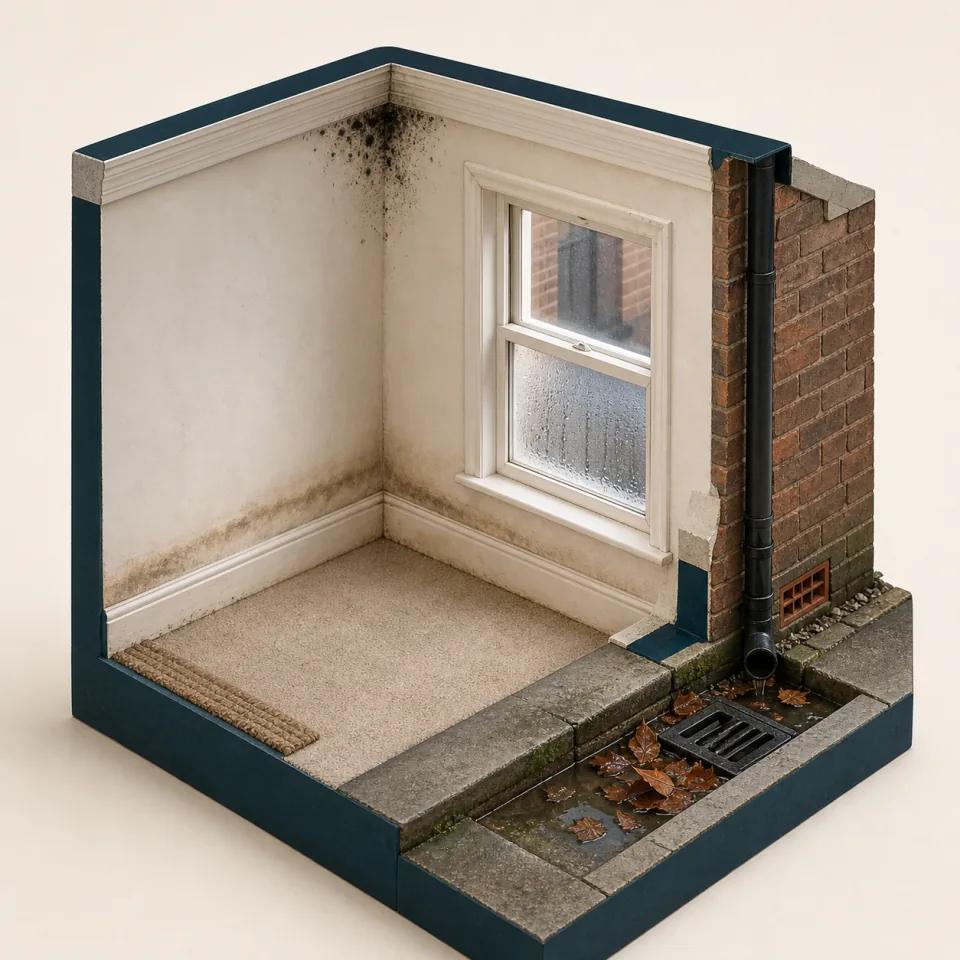
Damp and drainage
Smells, marks, mould, condensation, outside ground levels, gullies, and standing water.
Brown mark runs above the skirting; lower pane is wet; leaves and shallow water sit around the outside gully.
Follow up: Note weather and room conditions, then ask about treatment, leaks, drainage work, and supporting reports.
Use a consistent sequence
- Record smell before explanation. Pause when entering each room, cupboard, cellar, and loft area that the viewing permits. Note a musty or earthy smell and whether windows, fans, heating, or dehumidifiers are operating. Smell can support a follow-up, but it cannot locate the moisture source or establish the extent of a problem.
- Map visible moisture signs. Describe colour, shape, approximate size, height, and surface. Distinguish water droplets on a window from marks on plaster, mould in a corner, staining below a bathroom, or damage near a chimney. Photograph a wide room view and a close detail where permission allows, preserving location and scale.
- Check ventilation and recent finishes. Record whether extractor fans, trickle vents, and openable windows are present and apparently operating during the viewing. Note fresh paint, new wallpaper, furniture pulled away from walls, or strong fragrance as context only. None proves concealment; each can guide a neutral question about timing and maintenance.
- Connect outside observations. From permitted areas, note overflowing or stained gutter joints, damaged downpipes, blocked gullies, cracked render, poor pointing, sealed air bricks, vegetation, and ground or decking close to internal floor level. Record standing water and recent rainfall. Leave causal conclusions to an independent inspection.
What to put in the record
- Log room, wall, surface, height, approximate extent, smell, and whether the material felt dry; do not use invasive tests at a viewing.
- Record weather and occupancy context because moisture signs can change with rainfall, heating, ventilation, and how the home is used.
- Ask for dated reports, invoices, guarantees, leak records, insurance claims, and maintenance history rather than relying on a verbal label such as “condensation.”
- Mark rooms, voids, cupboards, drains, or elevations that were unavailable as “not checked.”
Questions for the seller or agent
- When was each visible mark first noticed, has it changed, and what investigation identified the moisture source rather than only treating the finish?
- Have there been leaks, blocked drains, overflowing gutters, plumbing repairs, insurance claims, damp treatment, or changes to ventilation and ground levels?
- Which independent inspection reports, photographs before decoration, invoices, guarantees, and follow-up moisture checks can be provided?
What this viewing check cannot establish
Do not identify a damp type from one mark, smell, mould patch, or handheld meter reading. RICS warns that moisture problems have many potential sources and that “rising damp” is often misused as a conclusion. A viewing record should describe evidence and conditions, not select a treatment.
Do not lift fixed flooring, scrape finishes, move heavy furniture, or enter unsafe voids. Avoid commissioning repair work from a diagnosis made during a sales viewing. Seek an independent building surveyor with suitable building-pathology experience where signs are significant, repeated, unexplained, or linked to health concerns.
When to get professional help
Send room-by-room notes and photographs to the surveyor before inspection. Ask them to consider likely moisture sources, external defects, plumbing, ventilation, construction type, and any limitations created by dry weather or restricted access. Where more work is needed, request clear scope and independent evidence before relying on a remedial quotation.
Continue the property record
Return to the complete UK property viewing checklist or review a connected check:
Use this check in the next decision
Keep the observation attached when you revisit, ask follow-up questions, or compare shortlisted homes:
- Second Viewing Checklist for UK Buyers
- Questions to Ask After a House Viewing
- How to Compare Property Viewings
Apply the same twelve checks with property-specific emphasis:
Primary sources
- RICS: damp and mould consumer guide
- RICS: house surveys, types, costs, and benefits
- GOV.UK: deciding on a home
Last reviewed 9 September 2026. England-focused general information; property, transaction, and professional requirements differ.